Red Button, Blue Button
Overview
So there’s been a thought experiment going around:
Everyone in the world has to take a private vote by pressing a red or blue button. If more than 50% of people press the blue button, everyone survives. If less than 50% of people press the blue button, only people who pressed the red button survive. Which button would you press?
It’s a tough choice and it has been understandably dividing the Internet, with this scenario spawning l o t s of threads on Reddit.
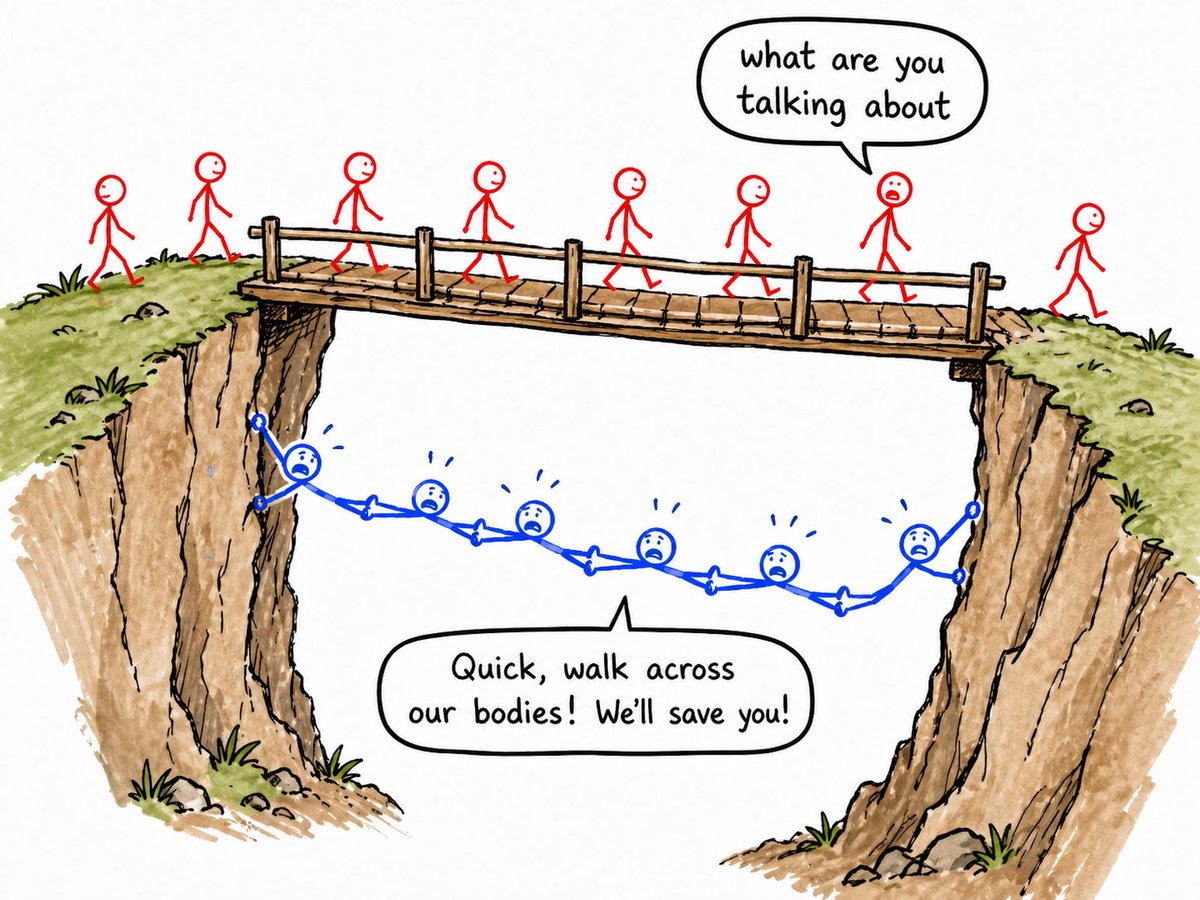
Figure 1: Red people mocking blue enjoyers “Inventing a sacrifice no one needs” (Source)
Game Theory
This scenario is, of course, prime for game theory as the action of one person affects directly the payoff by another. While the “everyone in the world” condition makes it hard to visualise this model as a game with 100 billion people, we can simplify it into a two-player simultaneous imperfect information game. Simply, the actions are that:
Red guarantees your survival alone
Blue guarantees everyone’s survival if other people choose blue
We define our player 1 as an individual person, and consider player 2 as an aggregate of all the people in the world. Let’s define the payoff for living as 1 and the payoff for not living as 0. A payoff of 1 can be achieved if player 1 chooses red, or if player 1 chooses blue and player 2 chooses blue. Let us define c as the proportion of player 2’s aggregate that chooses red. Then, the payoff for player 2 in a (red, red) situation would be c.
The (red, blue) and (blue, red) asymmetric situations require a bit more thought. Let’s consider 2 scenarios:
Large margins
If the margin between red and blue is greater than 1 for player 2, player 1 will receive 0 payoff while player 2 will receive c payoff for (blue, red), as comfortably there is less than 50% of the population choosing blue. Likewise, (red, blue) will result in a (1,1) payoff.
P1/P2
Red
Blue
Red
1,c
1,1
Blue
0,c
1,1
Table 1: Wide margins
Single-vote gaps
However, if the margin between red and blue is that 1 more person is choosing red than blue, P1 choosing blue will cause everyone to survive (let’s relax the conditions by having at least 50% of people choosing blue for everyone to survive). The rewards would then be (1,1). Likewise, if the number of blue and red people is equal within Player 2, Player 1 voting red would break the tie. They would get a payoff of 1, while player 2 would get a payoff of c.
P1/P2
Red
Red
1,c
Blue
1,1
P1/P2
Blue
Red
1,c
Blue
1,1
Table 2: Single-vote margins
Computing the Nash equilibria is straightforward: the best response to player 2 playing blue is an indifference response for player 1 between red and blue, as they would get 1 either way. However, the best response to player 2 playing red is for player 1 to play red for a reward of 1.
This is an aggregative game, and the player 1 as an individual player can be expanded by symmetry. The next aspect is to consider the effects and likelihood of a single-vote margin. As we increase the size of the aggregation (i.e. as player 2 consists of more and more players), the proportional likelihood of red or blue being decided by a single vote tends to 0. This is also seen in the paradox of voting where as the size of the electorate becomes larger, the likelihood of an individual casting the pivotal vote decreases.
The “rational choice” from a pure game theory perspective is then that of choosing the red option, as it guarantees a payoff of 1; by symmetry, the mutual best response of each individual that makes up player 2 is also to choose red. Therefore, c should be equal to 1 (which is also the Pareto efficient equilibrium, along with (blue, blue)).
However, when I asked my friends this, the majority of people chose blue (4) instead of red(2).
The reasons for choosing red were (the numbers do not add up to 2 as people gave multiple justifications):
“I want to live and don’t want to leave things up to chance” [1]
“If everyone presses red we all survive” [1]
“I’ve seen this before” [1] - well, this shouldn’t count, but anyway
The reasons for choosing blue were (the numbers do not add up to 4 as people gave multiple justifications):
“I think everyone else will pick blue” [1]
“It’s the only moral choice” [2]
“I don’t want to live in a world with only red people” [2]
Personally, I am a blue person, because my friends are mostly blue people (I knew this would probably be the case already before asking). However, if I could communicate before the decision, assuming perfect communication, I would encourage everyone, especially my blue friends, to pick the red button.
So why is there this gap?
The first possible reason is that of framing. Consider the following equivalent scenario:
Everyone in the world is crossing a road. We can choose to wait for the traffic light to turn green, or to cross the road immediately. No one is under time pressure and there is no additional benefit to crossing the road earlier. If more than 50% of the world’s population cross the road, the cars have to stop and everyone can cross the road. When the traffic light turns green, everyone can cross the road. However, if less than 50% of people cross the road, the cars will not be able to slow in time and the people who crossed the road will be hit.
In this case, it is quite obvious what to do as we face this situation day-to-day. No one jaywalks across a busy road trusting that others will follow them, and we are content to wait for the light to turn green so that everyone can cross the road safely. However, this scenario is phrased as a passive scenario, where the risk is associated with action (jaywalking). In the red/blue button case, the risk is associated with inaction (the red button). This creates a sense of responsibility to do something to prevent a bad outcome; however, inaction results in the exact same (good) outcome.
This shows up in the story of the businessman and the fisherman.
A similar example of both action and inaction resulting in the same outcome, with the Nash equilibrium being pushed towards action instead of inaction, is that of preparing for an exam. Let’s assume an exam is graded on a bell curve (i.e. As go to the top 30%, Bs to the next 30%, and so on.) Students would like to get the highest marks while putting in the least amount of work to maximise their utility, and we assume that each student has the same learning capacity and access to learning materials. The utility-maximising Pareto equilibrium would then be for every student to agree to not prepare for the exam and the bell curve will randomly assign them their marks. However, there is a very strong incentive to cheat; a small amount of preparation when no one else is preparing will guarantee that the student who prepares will be assured of good marks.
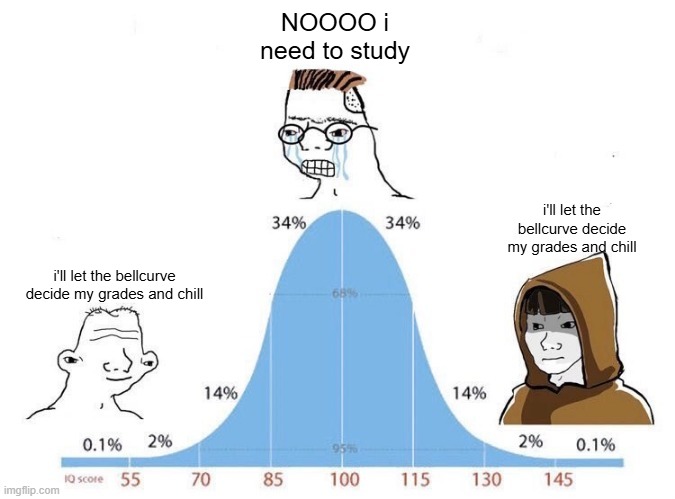
Figure 2: I do not have the rationality to move to either end of the curve, unfortunately.
By symmetry, the Nash equilibrium is that everyone maxes out their preparation - but as everyone has the same learning capacity, their marks end up getting assigned randomly by the bell curve. So lots of work for the same outcome :(
The next possible reason is that the Nash Equilibria computed in the initial scenario are not unique. It is not just the actions that are dependent on the other players, but the payoffs: initially, I had defined the payoffs as just “person live or not” because it was simpler to calculate from a mathematics point of view. However, the perceptions of fairness, compassion and empathy are incredibly important and should be taken into account. An example of this is the Ultimatum Game, which has the first player dividing up a sum of money and the second player deciding if they would want to accept the split. If they accept the split, each of them receives the payoff; otherwise, they all go back with nothing. This game can be described in the following matrix:
P1/P2
Accept
Reject
Fair
50,50
0,0
Unfair
p,100-p
0,0
Table 3: Ultimatum Game
A clear Nash Equilibrium is for the first player to divide 99/1 and for the second player to accept, as even though the split is incredibly unfair, 1 is more than 0 and both players are receiving higher payoffs than they would ordinarily. Even 100/0 would be a possible split, as that would mean that player 2 would be indifferent between accepting and rejecting and hence accepting is still a mutual best response.
However, Dixit et al state that experiments conducted in as diverse places as Indonesia and Slovakia display clear preferences for the weakly dominated fair split strategy for the first player regardless to the size of money being offered.
The conclusion given is that
“The results show not so much the failure of rollback as the theorist’s error in supposing that each player cares only about her own money earnings. Most societies instill in their members a strong sense of fairness, which causes the B players to reject anything that is grossly unfair. Anticipating this, the A players offer relatively equal splits.”
This would definitely be the case in the red/blue button scenario - and the heightened level of community awareness and empathy is an incredibly good thing. Kindness, fairness, sensitivity and empathy are strengths of our society today and that means that our decision-making payoffs are inherently intertwined with the perceived rewards others get. That is how things should be, and a person who rejects the original characterisation to describe the following as their payoff matrix, where their reward and society’s reward is dependent on how they relate to others, would have my deepest admiration and respect.
P1/P2
Red
Blue
Red
-c,-c
-c,1
Blue
1,-c
1,1
Table 4: An alternative reward
In this scenario, the person believes that “there is a baseline of people who will be choosing blue”, and their reward is fully dependent on if they are able to save everyone or not, with less regard to their own condition. In this case, choosing blue would yield the highest reward, as the person has done what they can to ensure that there are no losses. Red, however, is perceived as a loss-making choice, as given the assumption of a non-zero baseline of people choosing blue (see the trembling hand perfect equilibrium for more), choosing red would increase the likelihood of a negative outcome. In this scenario, it is quite clear that (blue, blue) is the dominant strategy.
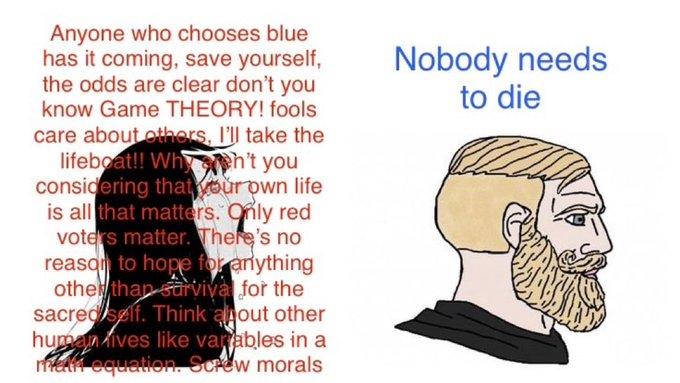
The third possible reason is that even with framing, we are irrational and there is an inherent sacrificial impulse. I came across this article which describes an impulse for us to irrationally sacrifice: particularly if there is a high degree of uncertainty and a named reason. I will not go into the details of this sacrificial impulse as I believe the article does an incredible job of describing it, and would strongly encourage anyone interested to read it and critically examine its contents. In this case, both ingredients are present - a high degree of uncertainty as we do not know who is a red person, who is a blue person, and who can be convinced; and there is a very clear named reason (everyone lives) for choosing a sacrificial option.
The “who can be convinced” aspect of this is equally critical, as we are in that phase. It’s quite interesting to think about how this choice would be made with communication/coordination, which brings me to:
Why does my own choice change with communication?
First, let’s start with overarching goals. Ideally, we get to a (1,1) situation - where everyone either chooses (red, red) or more than half of the population chooses blue, and my assumption is that everyone wants to live. With communication, it would then be the goal to move everyone towards the (red, red) equilibrium. Communication shifts the problem from a one-shot game to a coordination problem, where we are able to choose a stable, risk-dominant equilibrium that is robust to uncertainty. Robustified control is a form of control that is resilient to external disturbances or uncertainties. The main uncertainties in this case are:
How much of the population are red people?
What proportion of the red population can be convinced to choose blue?
What proportion of the blue population can be convinced to choose red?
Question 1 is a moot question as that would be impossible to tell. However, question 2 and 3 provide more viable entry points. Questions 2 and 3 motivate further questions on the underlying motives of blue and red people. This is purely my opinion - but my belief is that red people are either more risk-averse (wanting to not lose their own lives) or more individualistic, and blue people are either more risk-seeking or more communal (wanting to save everyone) in their outlook. It is more feasible to address the concerns of blue people and try to convince them to choose red - as everyone would be saved by choosing red - than to convince red people to put their own lives at risk by choosing blue. Tversky and Kahneman have argued that people weight losses heavily over gains, and framing the loss-averse red peoples’ choice in light of the unknown Q1 would potentially create a larger negative change in utility than the converse (convincing blue people to go to red), as the condition that everyone is saved would be fulfilled if everyone chose the red option; framing the blue version as the only version where a loss is incurred will trigger the loss aversion response of blue people.
Furthermore, choosing red as a control is robust to question 1: it is not dependent on how many people in the wider community are red people, or red people claiming to be blue people (and there is a higher incentive for red people to claim to be blue people than vice versa).
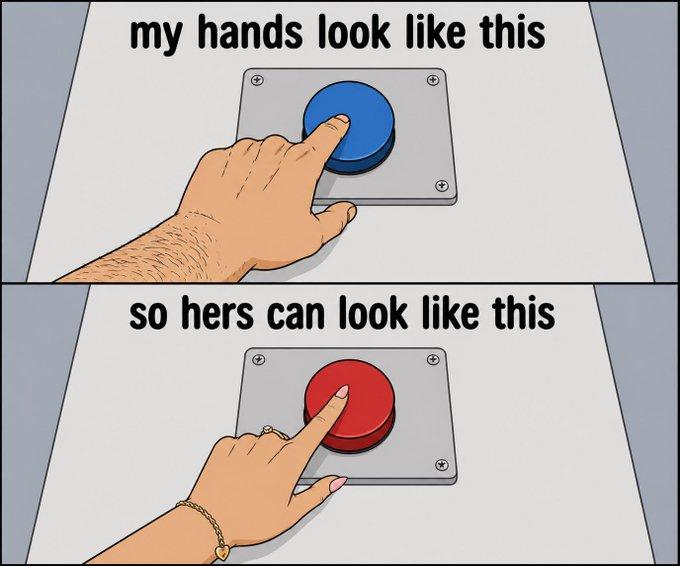
Figure 4: Different people have different definitions of robustness. (Source)
There is also the moral aspect to things: (assuming that everyone included in this is able to make the choice with a sound mind, so no babies/people who can’t differentiate the buttons) I would not feel comfortable with anyone - whether I know them or not - making an active decision to put themselves in danger to save me when an option exists where no one is in danger. While I previously mentioned that blue was the empathetic option, I think the pressure of someone risking their lives for me is not an empathetic choice if there is the chance to talk through things beforehand.
Of course, all of these are subject to caveats - one of the largest assumptions is perfect communication. Given that I can barely speak in 1 language, what chance do I have of articulating what I think? So I think I will be a blue person instead and save the communication. It’s easier :)